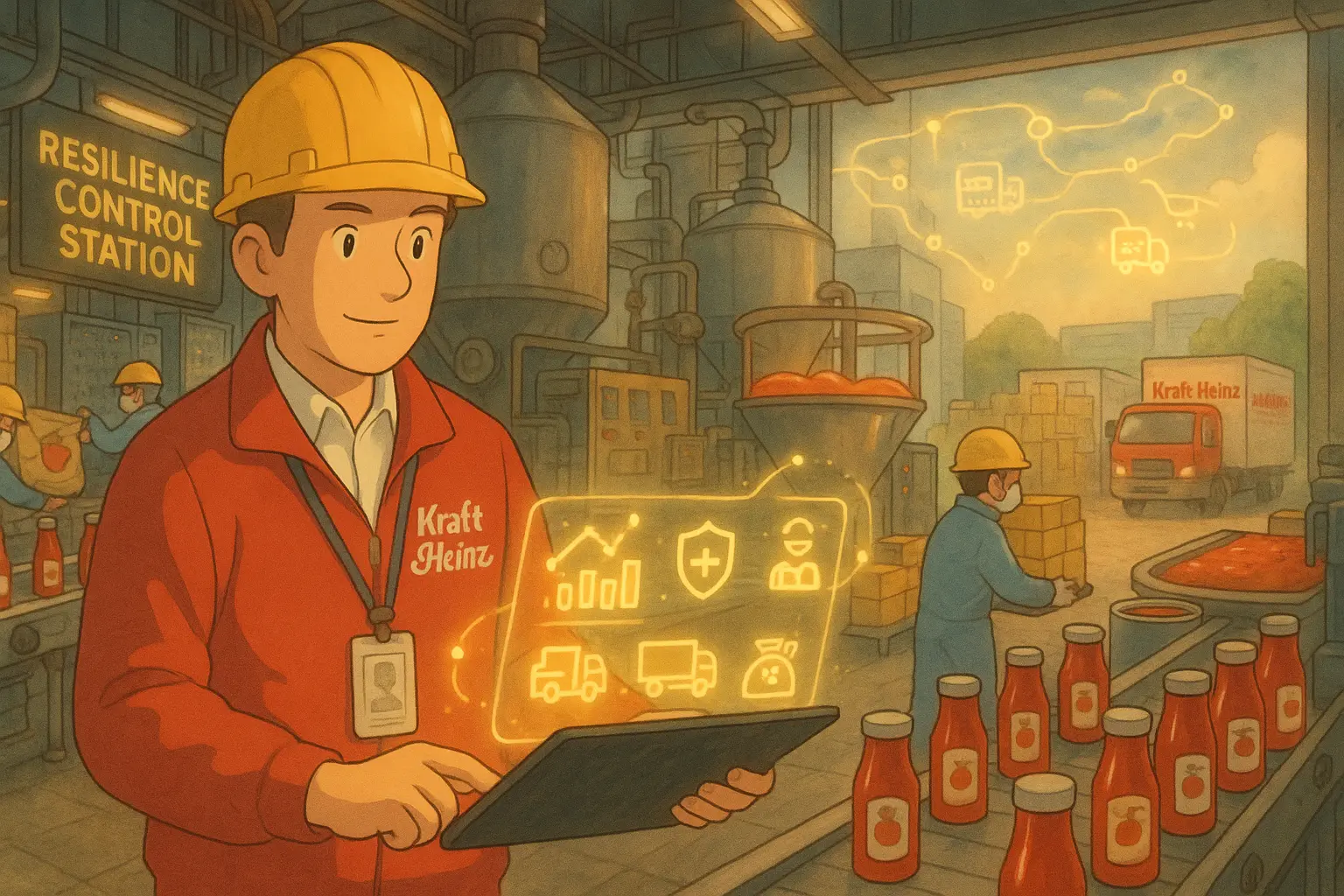
In 2020, Kraft Heinz’s supply chain faced a surge in demand usually seen during wartime or natural disasters. But instead of just reacting, the company rebuilt parts of its operations in real time and, in doing so, set a new bar for what supply chain resilience can look like at scale.
In this article, we will explore how Kraft Heinz increased its supply chain’s ability to respond to the crisis by acting faster, investing more deeply, and focusing more narrowly. Then we’ll look at how African supply chains can apply these same principles without a billion-dollar budget.
Key Nuggets:
- Kraft Heinz met the pandemic disruptions with aggressive operational focus, running U.S. factories 24/7 and streamlining product lines.
- The company made bold investments: expanding manufacturing in the UK and Spain, and launching a $400M automated distribution center in the U.S.
- These strategies shielded it from widespread disruptions and became a model for long-term resilience.
- African supply chains can apply these lessons by improving surge capacity, simplifying operations, and localizing critical production.
Why Kraft Heinz’s Supply Chain Had to Move Fast
When the pandemic hit, panic buying ensued, emptying grocery shelves in record time. Items like ketchup, soup, and boxed meals flew off store shelves. But this wasn’t just a good-old sales spike.
This time, it was a structural shock that rendered demand planning or forecasting useless.
The global shutdown that followed made logistics operations unreliable, which introduced shortages. It was a disruption on a scale that many hadn’t seen before. And Kraft Heinz didn’t have the luxury of waiting to act.
The company had two choices: protect the old model or overhaul it under fire.
Kraft Heinz chose the second path. According to CEO Miguel Patricio, the company had to adopt a simplified playbook. That meant product innovation was shelved, and SKUs were paused.
The company channeled everything toward output, focusing on getting its best-selling items to customers at record speed.
The result? Plants were breaking production records. One Iowa facility boosted production by 40% in a single month. And all this was happening even as competitors struggled to meet baseline orders.
Read More: Lessons From ASOS’s Inventory Strategy During the Pandemic.
Inside Kraft Heinz’s Supply Chain Strategy
Kraft Heinz’s response was an aggressive, multi-pronged strategy designed to bolster supply chain resilience and meet surging demand. Here is what that looked like:
1. Running Factories Like Emergency Rooms
The company ran its U.S. factories 24/7, and every line that could move was moving. But it did not try to meet the increased demand by hiring armies of new people. Instead, it unlocked more hours for the existing labor force and repurposed teams.
This way, labor was much more productive. Because the company had dropped some SKUs, production lines became easier to manage. That meant instead of jumping between low-volume niche products, workers were focused solely on the high-demand items.
2. Simplifying The Product Mix
By pausing about 25–40% of its SKUs, the supply chain freed up resources, eliminated switching costs on the production lines, and made room for high-volume output. By trimming fat, Kraft Heinz turned manufacturing from a scattered process to a much more focused one.
3. Making Big Bets on Production Capacity
In the middle of responding to the crisis. Kraft Heinz was still placing long-term bets on its future, demonstrating an ability to think beyond the crisis.
The company invested £140 million in a UK plant to bring sauce production back home and expanded its Spain facility to handle 50% more volume, including tomato processing. These weren’t short-term fixes; they were structural changes to reduce reliance on distant suppliers.
4. Building Smarter Distribution
In Illinois, Kraft Heinz broke ground on a $400 million automated distribution center. That facility is designed to handle 60% of foodservice shipments and 30% of all dry goods in North America.
But this wasn’t just about robots and shelving. It was about speed, routing flexibility, and rail access—all things that let Kraft Heinz manage uncertainty much more effectively.
When lockdowns froze movement, Kraft Heinz UK operations launched “Heinz to Home.” Within weeks, customers could buy pantry bundles online. It was fast, simple, and responsive to need.
Read More: Lessons From Xiaomi’s Localized Supply Chain in India.
5. Coordination Behind The Curtain
None of this works if there wasn’t effective communication between the teams. Kraft Heinz built an internal Ops Center that joined up supply chain, R&D, and marketing. When a bottle supplier fell through, the team swapped in a new format almost overnight.
The Impact of Kraft Heinz’s Supply Chain Strategy
The bold pandemic supply chain resilience strategy paid off in multiple ways.
- Continuity: The supply chain kept flagship products on shelves, even as the competition faced shortages.
- Efficiency: Pausing SKUs and introducing 24/7 shifts enabled the company to increase plant throughput to meet demand surges.
- Growth: By focusing on core products, the company significantly grew its retail sales of staples like condiments, meals, and coffee during the pandemic
- Trust: Supermarkets and consumers viewed Kraft Heinz as reliable, even when others weren’t.
The pandemic forced clarity. In that clarity, the company found speed, scale, and new routes to customers.
Do you want more supply chain stories like this? Subscribe here
Lessons For African Supply Chains
Resilience doesn’t require a Fortune 500 balance sheet. It starts with mindset and design. Here’s how supply chain leaders across Africa can apply similar strategies in their own environments.
1. Shrink the Complexity, Grow the Output:
SKU rationalization wasn’t just a response. It was a power move. Cutting low-priority SKUs gave Kraft Heinz breathing room to focus on what mattered. African supply chains can do the same during a crisis. It makes the supply chain leaner and much more flexible.
2. Speed Beats Perfection:
No one had time for perfect plans in 2020. The winning strategy was execution under pressure. And Kraft Heinz’s supply exemplified this very well. The company expanded facilities, shipped directly, and swapped suppliers quickly because going slow was the bigger risk.
3. Cross-Functional Means Functional:
The Ops Center wasn’t a mere pilot program. It was born out of necessity. In times of disruptions, real resilience is achieved by knocking down silos and linking decisions. Maintaining the status quo is a recipe for disaster.
4. Local wins when global fails:
By shifting sauce production back to the UK and tomatoes back to Spain, Kraft Heinz insulated itself from border risks while ensuring customers in these regions could access its products without the threat of delays or disruptions.
5. Invest in Resilience Before You Need it:
Kraft Heinz’s $400 million distribution center wasn’t a reaction. It was a hedge against the next disruption. Companies in Africa may not have that kind of money, but there is no crime against starting where you are.
Read More: Lessons From Walmart’s Sourcing Shift From China to India.
Wrap Up
Kraft Heinz’s supply chain was efficient during the pandemic because its response was swift and purposeful when the pressure hit. Supply chains across Africa and beyond can do the same.
The good news is that you do not need a global budget to build local strength. Start with simplification, add smart capacity, and build teams that talk to each other. Finally, act like the next disruption could be tomorrow—because one day, it will be.
Do you want more supply chain stories like this? Subscribe here

Obinabo Tochukwu Tabansi is a supply chain digital writer (Content writer & Ghostwriter) helping professionals and business owners across Africa learn from real-world supply chain wins and setbacks and apply proven strategies to their own operations. He also crafts social content for logistics and supply chain companies, turning their solutions and insights into engaging posts that drive visibility and trust.