How Pepkor’s Supply Chain Navigated the 2023 Port Disruptions in South Africa

In 2023, South Africa’s port system collapsed, and Pepkor’s supply chain was hit with a blow only a few retailers survive.
Nearly every container terminal buckled under years of mismanagement, underinvestment, and political dysfunction. Vessels waited weeks, stock remained offshore, and Pepkor had over R700 million worth of inventory stuck at sea during the busiest quarter of the year.
However, the company absorbed the hit, grew revenue in the same period, and gained market share. In this article, we explore how Pepkor’s supply chain navigated the port disruption. But before that……
Key Nuggets:
- South Africa’s 2023 port crisis left over 100,000 containers stuck at sea.
- Pepkor had R700M in inventory delayed—but avoided chaos by leveraging category-specific sourcing, domestic procurement for back-to-school stock, and air freight as needed.
- Its model shows that product mix, inventory positioning, and supplier trust, rather than speed, protect margins during infrastructure breakdowns.
Pepkor’s supply chain was built for storms. And this story holds one key idea for African supply chains: resilience isn’t what you do in a crisis, but how you’ve prepared beforehand.
The Breakdown That Clogged South Africa’s Supply Chains
South Africa’s 2023 port crisis was years in the making. By November of the same year, more than 70 vessels waited outside Durban alone. Equipment failures, straddle-carrier shortages, and severe rail breakdowns halted movement across the country.
Transnet, the state-owned logistics provider, became the biggest threat to South Africa’s economy, replacing even Eskom in that role.
Durban, which handles 60% of South Africa’s container volume, became the single biggest failure point. The port operated with less than half the required equipment while ships waited over 19 days for access
At its peak, the crisis locked up R1 billion in economic activity each day.
Read More: How Twiga Changed Food Distribution in Kenya.
Why This Was a Real Threat to Pepkor’s Supply Chain
Pepkor relies on imported fabrics and finished goods for parts of its product mix. So when Durban failed, its supply chain took a direct hit.
By November 29, CEO Pieter Erasmus publicly confirmed the impact: “We have R700 million worth of goods stuck at sea. Some products, particularly shoes, may face longer delivery times.”
The timing made matters worse, especially as December and January were approaching. For context: December meant the Christmas holidays, and January meant the school season. Both are critical for Pepkor’s top lines.
Even though the company had paid for the goods, they couldn’t sell them. Stock was stuck at sea, capital was frozen, and consumer expectations were rising with the season.
However, the business kept moving. Pep stores grew like-for-like sales 7.8%. Ackermans hit 8.7%, and revenue for the quarter rose 7.2%. Even with hundreds of millions in delayed inventory, Pepkor outperformed.
Read More: Lessons From LEGO’s Supply Network Expansion in Asia.
How Pepkor’s Supply Chain Navigated the Disruption
With no idea when the port delays would end, Pepkor was effectively stuck. But they took a few actions that defined their quarter. Here are some of them:
1. Protected the Most Important Categories
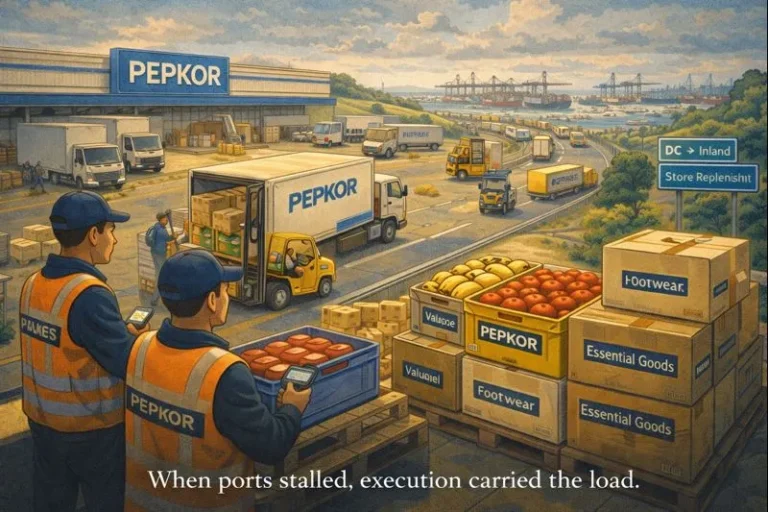
Pepkor didn’t treat all inventory the same. Back-to-school goods were sourced from within South Africa. But the supply chain secured raw materials months ahead, which gave the company control over its most time-sensitive sales period
This move insulated its biggest seasonal volume from international chaos.
Shoes and select fabrics were still imported. But because those items weren’t central to the back-to-school spike, the risk stayed contained.
2. Paid More to Move Faster
Where needed, Pepkor used air freight. Yes, it was expensive, but it was also cheaper than missing sales.
Air lifted stock filled gaps that could’ve cost more in lost revenue. However, that flexibility came from advanced planning—contracts and supplier relationships already in place before disaster hit.
Do you want more supply chain stories like this? Subscribe here
3. Brought In Inventory Earlier Than Usual
The logistics team didn’t wait for the storm to clear. They pulled forward Q1 inventory to buffer Q4 sales. That decision, which was made while ships still sat offshore, meant the shelves didn’t stay empty when it mattered most.
Pepkor’s high-frequency replenishment model helped here. The company was accustomed to moving stock quickly and frequently. When things broke down, it already had the muscle to respond.
What African Supply Chains Can Learn From Pepkor’s Supply Chain
Pepkor’s supply chain resilience holds lessons for supply chains across Africa, including:
1. Don’t Wait to Panic. Assess Infrastructure as a Risk Input
South Africa’s port issues weren’t new. Public data showed Transnet’s equipment had declined for years. Container volumes were down, and turnaround times had worsened. Anyone watching closely could’ve spotted the warning signs
African supply chains must treat infrastructure metrics as they do demand forecasts. Poor port scores? Expand buffer stock. Rising vessel delays? Shift entry points. The lesson is simple: risk starts before the bottleneck forms.
2. Segment Inventory Sourcing Based on Category Risk
Treat fast-moving, high-volume items differently from trend-dependent goods. If one stockout damages your year, source it locally—even if the price is higher. As Pepkor’s supply chain showed, costs increase during disruptions, such as an infrastructure collapse.
Use imports for goods with a longer shelf life or less revenue impact. Design the structure before you need the flexibility.
Read More: Inventory Lessons From The Red Sea Crisis Disruption of Volvo’s Supply Chain.
3. Maintain Optionality, Even if It Costs More Upfront
Air freight is expensive, so it is understandable if it is not your first choice. That being said, it shouldn’t be your last hope either. Keep logistics partnerships open. Pay a premium on access, not usage, and build agility into your operations during calm seasons. It pays off in storms.
4. Build Communication Plans for Logistics Disruption
Supply chains aren’t just about trucks and stock. They are also about trust. Customers, suppliers, and investors want one thing during a crisis: truth.
Pepkor won confidence by sharing what it knew, what it didn’t, and what it was doing. This removed doubt from the chain—even if it didn’t remove the delays.
Do you want more supply chain stories like this? Subscribe here

Obinabo Tochukwu Tabansi is a supply chain digital writer (Content writer & Ghostwriter) helping professionals and business owners across Africa learn from real-world supply chain wins and setbacks and apply proven strategies to their own operations. He also crafts social content for logistics and supply chain companies, turning their solutions and insights into engaging posts that drive visibility and trust.