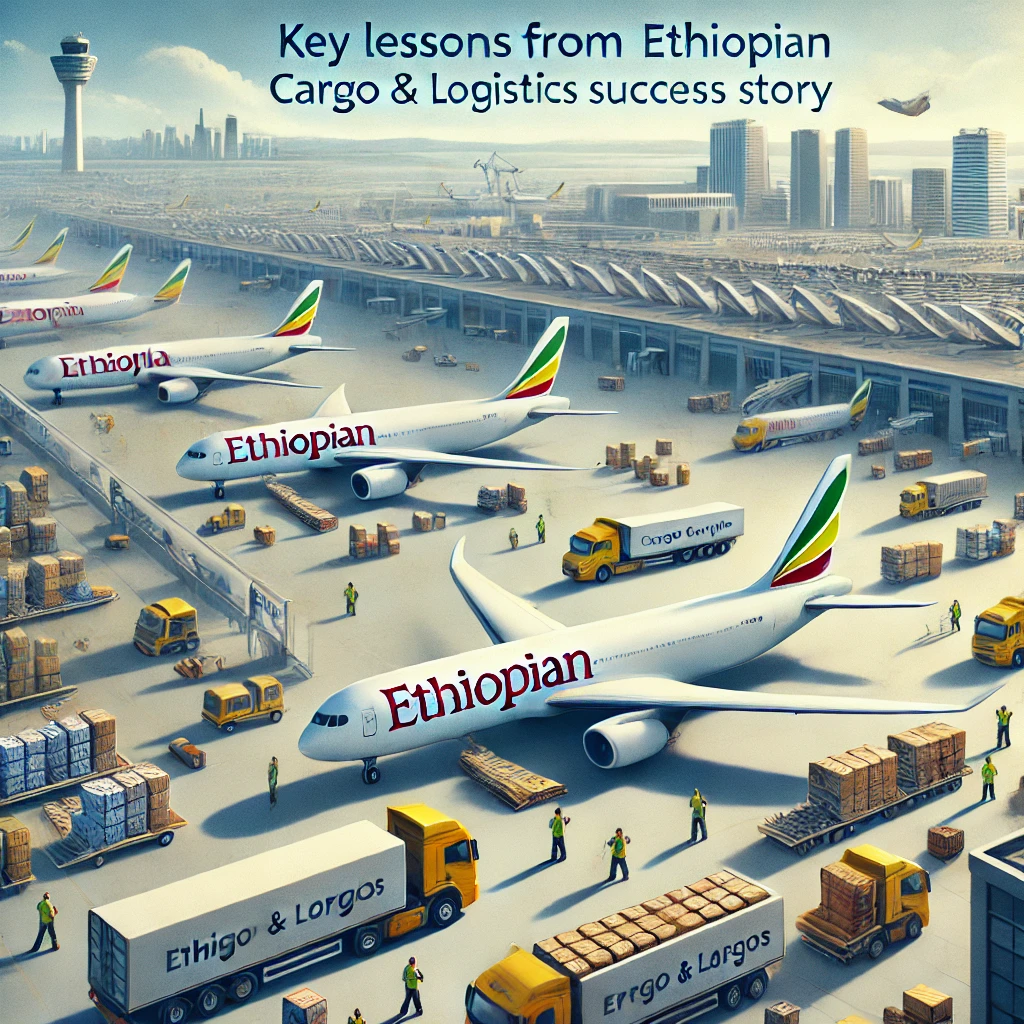
The last two decades have seen Ethiopian Cargo & Logistics Services, the air cargo arm of Ethiopian Airlines, rise from obscurity to become the largest air cargo carrier in Africa.
But for a company that was a small part of Ethiopian Airlines, an afterthought if you will, the rise holds a lot of lessons, especially for various logistics and transportation companies across Africa.
So, how did the company go from a small non-consequential part of a business to becoming an air freight behemoth?
How it all started
Although launched in 1965, Ethiopian Cargo & Logistics Services was just a regional air carrier, relying on passenger planes to transport cargo.
Towards the end of the 20th century, the company had serious problems, such as outdated infrastructure, limited resources, and inefficient terminals that plagued the air cargo industry.
However, in the middle of these, Ethiopian Airlines saw an opportunity to change the narrative.
But the company’s big move would not come until 2003 when it invested heavily in cargo operations. The investment was focused on upgrading its cargo terminal at Addis Ababa Bole International Airport, improving capacity and handling efficiency.
At the same time, Ethiopian Cargo & Logistics Services began acquiring dedicated freighter aircraft, a shift away from relying on passenger planes to carry cargo. With this new focus on infrastructure and fleet expansion, the cargo company began to grow fast.
And as demand grew, the company added more destinations and increased the volume of cargo it could handle, including specialized shipments like pharmaceuticals and perishables.
By 2019, Ethiopian Cargo & Logistics Services had overtaken all other African carriers in freight tonne kilometers (FTKs), becoming the largest air cargo carrier on the continent. You would think the company would stop there, but it didn’t.
The leadership kept pushing forward, offering cutting-edge services and building partnerships with global logistics providers.
Today, Ethiopian Cargo & Logistics Services is a key player on the global stage. And the company got there by addressing the problems no one else was solving.
Read more: The Idea that changed Logistics and Delivery: A FedEx Story
Lessons From The Success of Ethiopian Cargo & Logistics Services
Ethiopian Cargo & Logistics Services built an impressive air cargo operation that now serves as a model for other African carriers. However, from the story, it is clear it wasn’t without some hard decisions and a dedication to the goal.
So, what are the lessons we can learn from the company?
1. Investing in Infrastructure is Key to Scaling Up
Ethiopian Cargo & Logistics Services invested significantly in cargo terminals, modern freighters, and facilities. This focus on infrastructure allowed the company to handle increased volume and offer better service.
The lesson for other air carriers operating within Africa is not to be afraid to invest in infrastructure. Investing in modern, efficient infrastructure is a key step in expanding air cargo operations.
2. Strategic Expansion and Global Partnerships Matter
The company did not try to do everything on its own. The company strategically partnered with stakeholders, including other global logistics companies and freight forwarders, to enhance its reach.
By collaborating with players like DHL and FedEx, Ethiopian Cargo & Logistics ensured it could offer global service and access to key markets.
3. Technology Makes Operations More Efficient
The company adopted advanced technologies for tracking and managing shipments. Their real-time cargo tracking and air cargo management systems streamlined their operations and allowed for faster, more efficient service.
For African air carriers, technology is critical for staying competitive in today’s fast-paced logistics environment.
4. Take Advantage of Africa’s Strategic Location
Ethiopian Cargo & Logistics Services benefits from Ethiopia’s central location in Africa, making Addis Ababa a key transshipment hub. The airline’s hub-and-spoke model helps them efficiently connect African businesses to global markets.
For other carriers, strategically positioning hubs in key cities across the continent can increase access to international markets.
5. Offer Specialized Services to Stand Out
By expanding their service offerings, such as offering temperature-controlled shipping for pharmaceuticals, Ethiopian Cargo & Logistics Services was able to cater to niche markets.
Other air carriers can learn from this by considering specific market needs, such as e-commerce, perishables, and pharmaceuticals, and offering tailored solutions to meet those needs.
Read more: 4 Pain Points of Logistics Businesses in Africa.
How African Air Cargo Carriers Emulate Ethiopian Cargo and Logistics Services
Air cargo and other logistics operations in Africa indeed face several challenges, such as:
- High operating costs
- Limited infrastructure
- And competition from global carriers.
However, these are not new challenges. The story of Ethiopian Cargo & Logistics Services shows that these challenges can be overcome with a clear strategy and investment in key areas.
For African air carriers seeking to replicate Ethiopian Cargo & Logistics’ success, here are a few takeaways:
- Focus on developing infrastructure to help expand capacity and attract more clients.
- Leverage technology to improve efficiency, reduce errors, and enhance customer satisfaction.
- Form strategic partnerships with stakeholders in the air logistics process, because it can provide access to international markets and improve service offerings.
- Diversify service offerings and find niche markets’ needs, such as providing e-commerce solutions. It will help build a competitive edge in the market.
- Many African countries have strategic locations between key global markets. It is time to utilize them, especially to position the air carrier as a hub connecting Africa to the rest of the world.
African air cargo carriers have a lot of potential to grow, and Ethiopian Cargo & Logistics Services provides a roadmap for success.
By learning from the Ethiopian Cargo & Logistics’ example, they too can expand their reach and tap into the growing demand for air freight in Africa and beyond. Other carriers can enhance their service offerings and become key players in the global air cargo market.

Obinabo Tochukwu Tabansi is a supply chain digital writer (Content writer & Ghostwriter) helping professionals and business owners across Africa learn from real-world supply chain wins and setbacks and apply proven strategies to their own operations. He also crafts social content for logistics and supply chain companies, turning their solutions and insights into engaging posts that drive visibility and trust.